Artificial intelligence (AI) has moved beyond being a futuristic, almost science-fiction concept to become a real driver of change in sectors as diverse as medicine, automotive, and digital marketing. Its ability to analyze data, generate creative solutions, and automate processes is transforming the way we work and design.
Because who hasn’t used AI to get travel recommendations, find the perfect dinner recipe, or translate an email in seconds and save time? This same technology, which makes our lives easier and faster, is now beginning to revolutionize the world of fashion, even in something as seemingly small as clothing labels.
The evolution of label design: from the pencil (or brush!) to the algorithm
Traditionally, designing a clothing label involved a long and manual process. The designer had to carefully select fonts, colors, sizes and materials that fit the brand’s identity. For example, choosing a too modern typography could conflict with the classic style of a collection; an incorrect color could make the label not stand out on the garment or be confused with other brands; and deciding between cotton, polyester or silk for the label required physical tests of resistance and touch. The designer had to carefully select fonts, colors, sizes and materials that fit the brand’s identity. For example, choosing a too modern typography could conflict with the classic style of a collection; an incorrect color could make the label not stand out on the garment or be confused with other brands; and deciding between cotton, polyester or silk for the label required physical tests of resistance and touch.
Each change or correction involved redoing the entire design: adjusting proportions, reviewing legibility, requesting new printing tests… This generated delays, increased material costs and, in many cases, frustration for both designers and production teams. Imagine trying to align a logo with lowercase letters, trying different color combinations and sending physical samples for review, all repeatedly until the perfect final version is found.
Now, artificial intelligence offers solutions that speed up every step of the process: it allows you to experiment more, correct less and produce quickly, freeing up time to focus on creativity and strategic details that really make the brand stand out.
How does AI improve label design?
A fast and efficient assistant to creativity
Advanced algorithms not only analyze fashion trends and styles of reference brands, but can also combine historical sales data, customer preferences and color patterns that work in social networks. This allows you to automatically create multiple design options in minutes, something that used to take days. For example, AI can propose combinations of modern typography with classic colors, or unexpected geometric shapes that maintain consistency with the brand’s identity, offering the designer a much wider range of possibilities without limiting creativity.
Finally, the customization on a large scale
For brands with extensive collections or limited editions, adapting labels to each clothing line or even to each garment can be a real challenge. The AI allows to create variations automatically: from labels with different collection numbers to adjustments in the size of the logo according to the garment.
AI helps design with environmental awareness
The AI also helps to choose the most suitable materials for each type of label, evaluating resistance to washing, durability and feel. In addition, it can suggest sustainable alternatives that reduce the environmental impact, such as recycled threads or biodegradable fabrics, without sacrificing appearance or functionality.
Labels without failures: reduction of errors and costs
Automating the design process with AI minimizes human errors, such as legibility problems, incorrect alignment or choosing colors that don’t match the garment. It also reduces the waste of materials in physical tests, since many simulations are done digitally. The labels arrive ready for production to be integrated into the garments, with fewer revisions and a significant saving in time and costs.
And what will the collaboration between AI and human designers look like?
It’s important to remember that AI isn’t meant to replace designers’ creativity; on the contrary, it enhances it. At Indet, designers use AI as a teammate: they quickly test different options, experiment with combinations they wouldn’t have even considered before, and can dedicate more time to strategic decisions or details that truly make a difference.
Gracias a esta colaboración, cada etiqueta se convierte en algo único: refleja la identidad de la marca, es atractiva para quien la ve y, aunque parezca un detalle pequeño, consigue sumar valor real a la prenda. In other words, AI helps designers be more creative and efficient, not by replacing their talent, but by enhancing it.
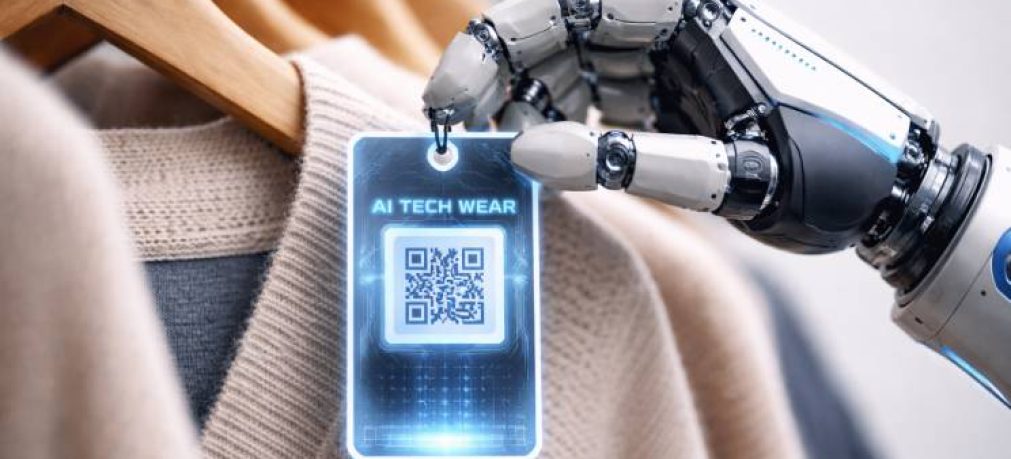
Technology is advancing by leaps and bounds, and fashion is no exception. In just a few years, it’s easy to imagine smart labels that communicate with fashion apps, explain in simple terms how the garment was made or what materials were used, and even adapt to your preferences thanks to AI. What seems like science fiction today will be part of how we enjoy and choose clothes tomorrow, turning a small detail like the label into a closer, more interactive and useful experience for the consumer.
Learn more about AI, labels, and fashion at:
- Impact of Artificial Intelligence on Garments and Fashion Industry
- Artificial intelligence and sustainability in the fashion industry: a review from 2010 to 2022
- Artificial intelligence in textile and fashion design: a bibliometric analysis
- A Systematic Review of Reimagining Fashion and Textiles Sustainability with AI: A Circular Economy Approach