
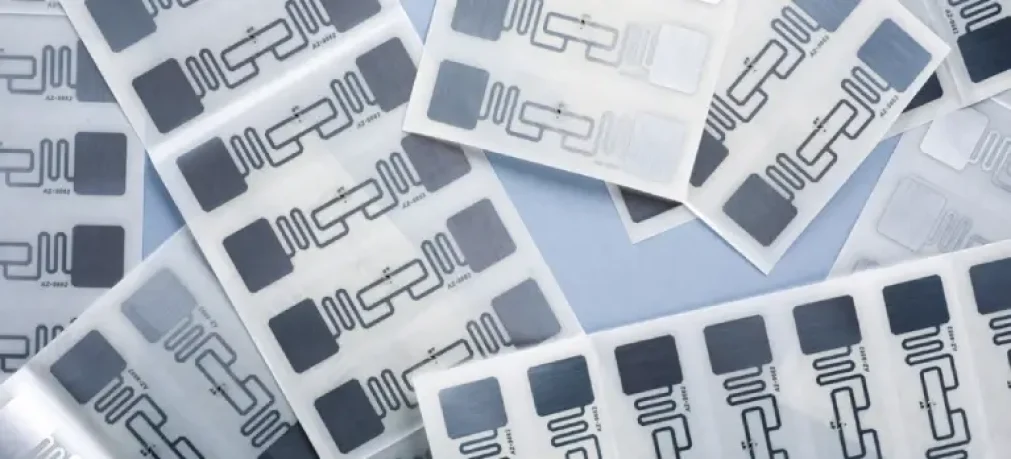
RFID clothing labels have become an essential tool for managing stock, from the manufacturing stage right through to the point of sale. However, like any technology, their success depends on how well they are used and managed.
At Indet, we have been designing and manufacturing labels for leading fashion brands for many years. In our experience, most logistical issues are not caused by the technology itself, but by small oversights that can easily be avoided with a little planning. If you want to get the most out of your RFID labels, here are the most common mistakes — and how to prevent them.
1. Incorrect placement of labels
One of the most common issues we see is RFID labels being placed in the wrong position. This may seem like a small detail, but it has a direct impact on how well the label can be read. If the label is folded, covered by metal stitching, or placed in a hard-to-scan area, readers may fail to detect it properly.
How to avoid it:
- Define clear placement guidelines for each type of garment.
- Use visual guides for production or warehouse staff.
- Carry out reading tests before shipping large batches.
A typical example: a jacket with an RFID label placed underneath a metal zip, which blocked the signal. The solution was simple — moving the label to a flat, visible area and keeping it away from nearby metal.
2. Not checking technological compatibility
Not all RFID labels and readers are the same. A very common mistake is assuming that any reader will work with any label. This can lead to failed readings, warehouse delays, and inventory errors.
How to avoid it:
- Always check that labels are compatible with your existing readers.
- Consider the label’s frequency and the environment in which it will be used (garments with metallic fabrics, storage in boxes, etc.).
- Run pilot tests before rolling out a large-scale implementation.
Remember: technology is a great ally, but only if all parts of the system speak the same language.
3. Lack of real-time inventory control
Another common mistake is not taking full advantage of RFID to track inventory in real time. Many brands still rely on manual counts, which can create discrepancies between what’s actually in the warehouse and what the system shows.
How to avoid it:
- Integrate RFID with your ERP or inventory management software.
- Set up automatic alerts for stock inconsistencies.
- Carry out regular audits to ensure system accuracy.
When inventory data is out of date, it doesn’t just lead to lost sales — it also creates unnecessary costs. With RFID correctly implemented, these issues can almost disappear entirely.
4. Defective or poorly stored labels
RFID labels are durable, but they’re not indestructible. Poor storage or handling during transport can damage them, rendering them useless. The most common mistakes include folding them, exposing them to extreme heat or moisture, or using adhesives that don’t work with certain fabrics.
How to avoid it:
- Carry out quality checks before sending labels to production.
- Store labels in appropriate conditions, away from moisture and extreme heat.
- Train staff to handle them carefully.
5. Underestimating team training
Even with the best technology and the most reliable labels, the human factor remains crucial. Many logistical mistakes come from a lack of training or unclear protocols: incorrect placement, improper scanning, or confusion over what to do if a label fails.
How to avoid it:
- Train your team using simple, visual instructions.
- Create clear protocols for handling errors.
- Repeat training regularly to reinforce good practices.
RFID is a powerful tool for fashion, but as we’ve seen, its success depends on small logistical details. Avoiding these mistakes doesn’t require reinventing the wheel — just careful planning and best practices.
At Indet, we want your labels not only to be well made but to work perfectly from day one. After all, every garment counts — and so does every label.