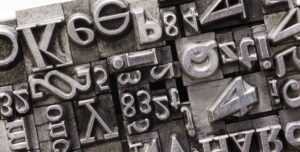

Labels went from being a small piece of fabric or leather indicating the manufacturer and, at best, some information about composition or size, to small vessels of regulated information. However, throughout history there have been brands that have known how to make the most of that tiny piece to reinforce their brand message, surprise their customers and leave a lasting impression in the minds of consumers. Here are some of the ones that have inspired us most.
1. The oldest labels: from Phoenicia to wine jars
We tend to talk about labels in connection with the history of fashion, but in fact the earliest forms of “label” date back to 3000 BC, found on medicines, wine amphorae or bundles of cloth — in other words, used to tell one batch of goods apart from another. In fact, the oldest labels ever found were discovered in Egypt: small pieces of bone and ivory with a hole through which they were attached to an item, indicating who an offering was intended for or where it came from.
We could say that labels were born as a tool of commercial trust, long before becoming an element of fashion or branding. And the curious thing is that, centuries on, they haven’t lost that “guarantee” function at all.

2. Levi’s Red Tab: the most famous and imitated label in history
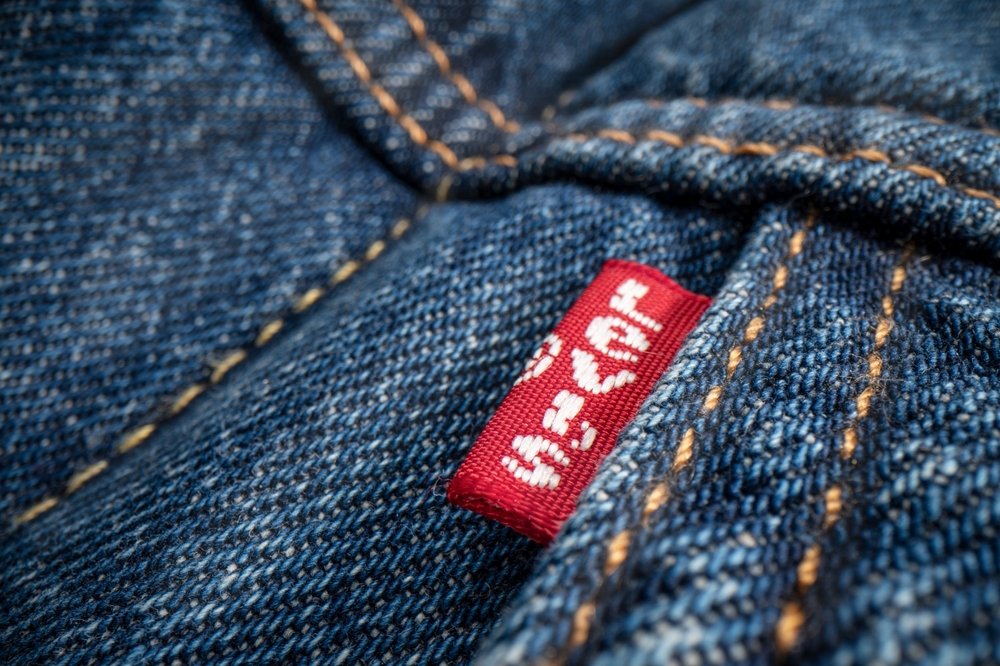
The name Red Tab might not mean much if you’re not in the fashion industry, but the image is unmistakable: nobody pictures a pair of Levi’s without that famous red tab. The curious part? It wasn’t always red…
And of course, the Red Tab was first stitched onto the back right pocket of the jeans with one explicit aim: to set Levi’s apart from the competition. Levi’s had been using metal rivets as a patented reinforcement system since 1873, but once that patent expired, any competitor could make riveted trousers, so the brand needed a new way to stand out.
It’s probably the first example of a label conceived explicitly as a mark visible from outside the garment — not there to explain how to wash it, but so it could be recognised from a distance. It laid the groundwork for what we now call textile “branding”, and later inspired the coloured tabs (orange, gold) Levi’s used to differentiate its product lines.
3. Care symbols: a universal language born from a very specific problem
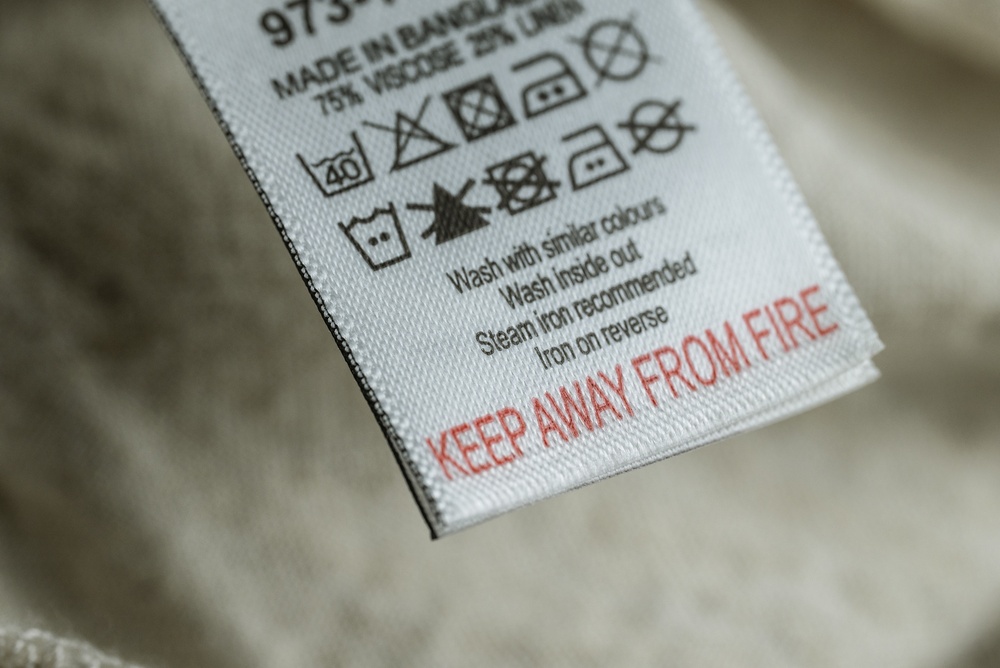
Care symbols — those odd little icons most of us ignore on any garment’s label — have a curious origin. Until the mid-1950s, clothes were made almost exclusively from natural fibres, so two wash programmes were more than enough, and in many cases people didn’t even need those, since clothes were washed by hand. But in the 1960s, the rules of the game changed: synthetic fibres, growing international trade and, as a result, a rise in laundry disasters.
Fortunately, in 1963 in Switzerland, a decision was made to create a “language” that could cross borders and allow garments to be washed more safely. Today, it’s a system of icons understood the same way in Tokyo, Bogotá or Barcelona, and one that solved a real problem (clothes ruined by incorrect washing) long before global online shopping existed.
4. The Woolmark: the most awarded logo-label in history
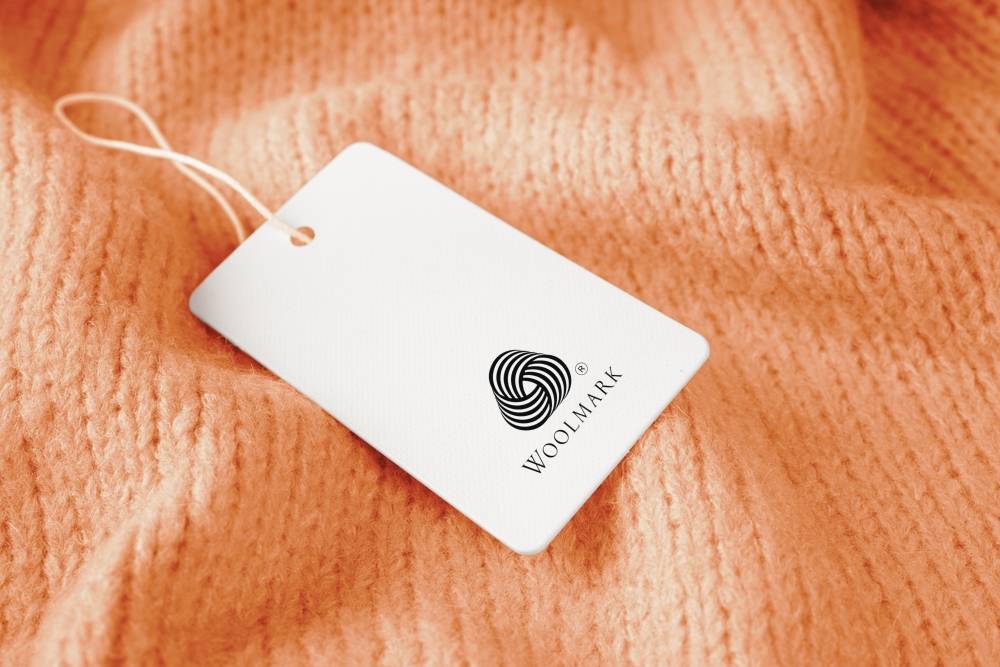
If the care symbol system solved the “how to wash” question, the Woolmark solved “what’s genuine”. During the Second World War, wool found an unexpected rival: synthetic fibres, and by the 1960s nylon, polyester and acrylic had become common fabrics in households.
To fight back, William Vines, general director of the International Wool Secretariat in Australia, proposed the idea of a single label guaranteeing fibre content and wool quality — and from that came the iconic Woolmark logo, a stylised skein made of curved lines.
It was one of the first certification labels in the textile world, a seal that didn’t just identify a brand but guaranteed a verified material composition. We could consider it the direct forerunner of today’s certifications, such as organic cotton or fair trade.
5. The label with no name: Maison Martin Margiela
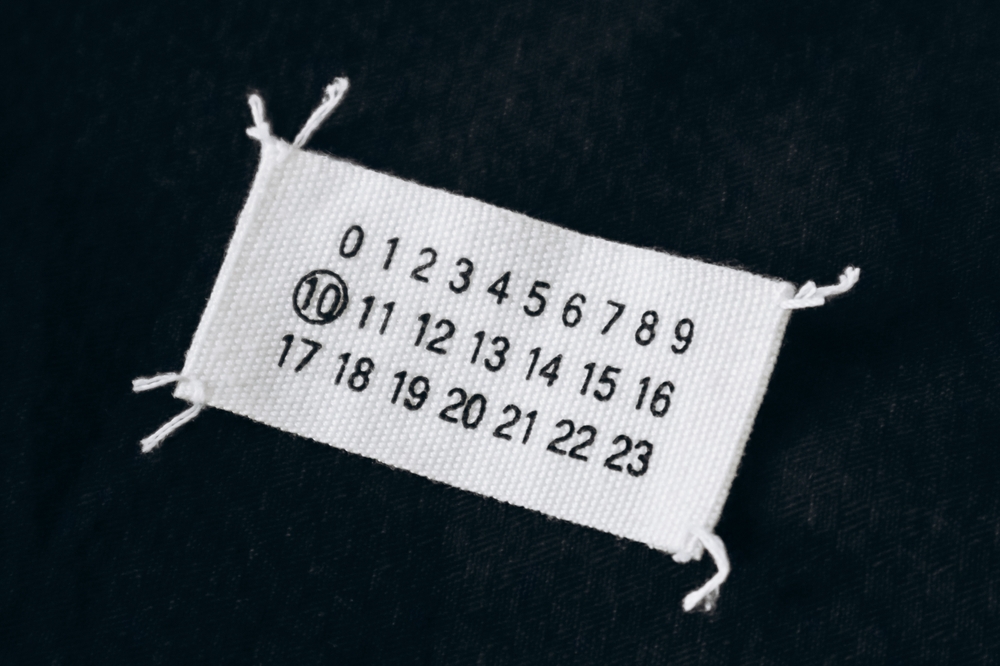
At the height of the loud, logo-driven 1980s and 90s, Belgian designer Martin Margiela did just the opposite: he removed his name from the clothes. His labels were entirely white, stitched to the garment with four visible white stitches, in an emblematic challenge to the logo obsession that dominated 90s fashion.
Margiela turned the absence of a logo into a status language all its own (the “logo of anonymity”) and proved that a label can communicate brand identity without using a single recognisable letter. It remains one of the most cited design references when discussing “logomania” — and its opposite.
6. The funny label phenomenon
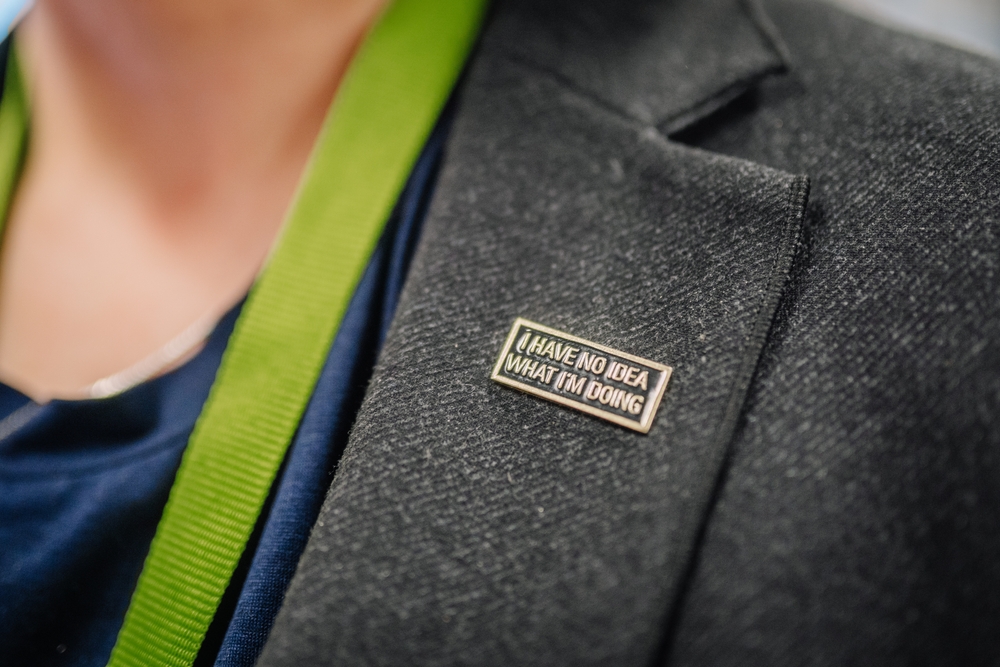
And then social media arrived, and with it, chaos: alongside the solemnity of the Woolmark or the minimalism of Margiela, there’s now an entire genre — hugely viral online — of labels designed purely to make people laugh or catch them off guard.
Sites like Bored Panda or Cultura Inquieta have spent years collecting examples of labels featuring unexpected life advice, unintentional translation errors, and simply funny messages (though some, admittedly, not without a bit of controversy…).
This trend turns a purely functional element — one that’s legally required in most countries — into an emotional touchpoint with the customer.
7. Labels for the five senses
Beyond picking up the label and looking at it, some brands have chosen to engage other senses too.
Hanes, for example, revolutionised the market with Hanes Tagless, a T-shirt with no sewn-in label, applying the information directly onto the fabric via heat transfer and eliminating the chafing of a traditional tag. That “tagless” concept has since become standard in children’s, sportswear and underwear categories, and is particularly important for people with sensitive skin or sensory sensitivity, for whom an itchy label can mean constant discomfort.
We’ve also seen microencapsulated textile labels carrying different scents — a technology originally developed for perfumery and cosmetics but now finding its way onto textile labels as a way to reinforce the brand experience.

8. From digital tags to the digital passport
The most radical innovation in the recent history of the fashion label isn’t stitched on or printed — it’s scanned. For years now, labels have been able to carry RFID technology to manage stock control and traceability in-store, marking a real turning point in logistics for fashion manufacturers.
And now that technological leap has become a legal requirement with the European Union’s Digital Product Passport (DPP). Each passport will be digitally linked to the product via a unique identifier, typically through QR codes, NFC tags or RFID, allowing customers or regulators to scan it and get the information instantly.
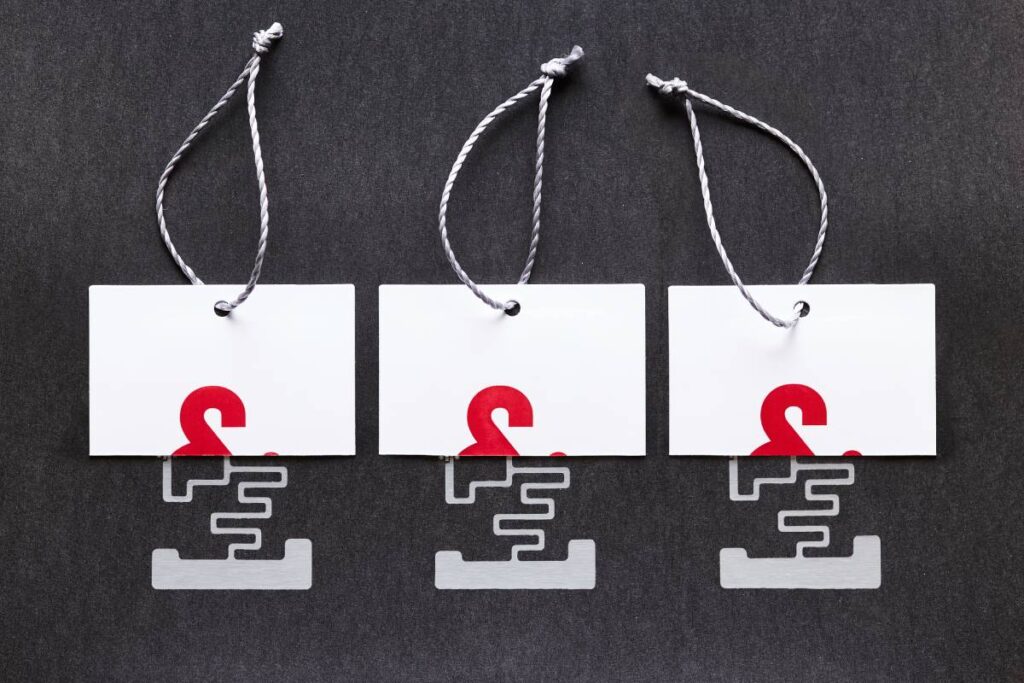
It’s the biggest leap the label has taken since the 1963 care symbols: the physical label stops being a fixed piece of text printed once, and becomes the gateway to a living database.
From a bundle of Phoenician merchandise to a European QR code, the label has come a remarkably long way for such a small object: it’s been a guarantee of quality, a weapon of brand differentiation, an artistic statement, a private wink between brand and customer, a legal requirement for consumer protection, and now, a digital passport of traceability. Next time you feel the urge to rip it off because it itches — we won’t tell you not to — but it might just be worth reading first.