
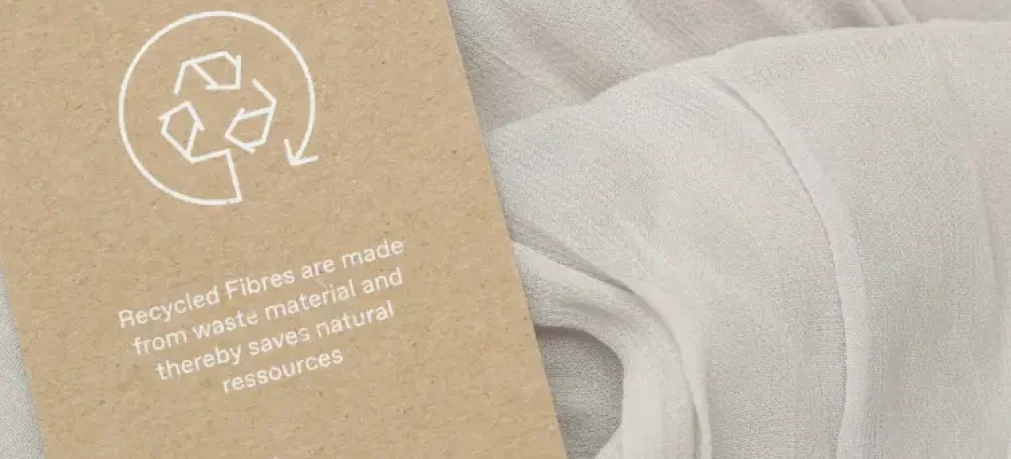
Data on consumption and sustainability are clear year after year: consumers care about the environment, and this influences their purchasing decisions. We have moved from fast fashion to conscious fashion. However, a recent study indicates that although 61% of consumers are concerned about climate change and try to ensure their actions have a positive impact, only 51% believe that their individual decisions lead to a real change.
This is what we know as the credibility gap: the consumer cares, but doubts that their individual action is enough, which is why they expect brands not only to promise sustainability but also to provide the necessary verifiable evidence to confirm that their purchase decision generates a significant change.
Many companies are already adopting more environmentally friendly practices, but they often fail to communicate this effort with the transparency that consumers demand to close the gap. If we add that greenwashing has generated deep skepticism among consumers, the message is clear: the key is no longer just being sustainable, but proving it.
To achieve this, a consistent communication strategy that covers all customer touchpoints is needed. And one of them is the label. It is the final touchpoint, but a critical detail when it comes to transparently conveying environmental information.
The question is: how can we integrate the clothing label into our sustainability communication strategy?
1. Label Materials (Or, How to Practice What You Preach)
Imagine you want to buy a t-shirt and you opt for a brand that positions itself as sustainable, featuring 100% organic cotton, eco-friendly dyes, and indicating that the raw material was sourced from fair trade producers. Perfect. You check the size and find a conventional plastic tag. Maybe it’s recycled or recyclable plastic. You don’t know for sure. Once again, the credibility gap: is the brand/garment really as sustainable as it seemed?
That’s why, as a company, we must extend our sustainable practices to the material the label is made from, such as recycled polyester (rPET), organic cotton, recycled Tyvek, stone paper, recycled leather, recycled paper, cannabis paper, grass paper, or rice paper… today there is a very wide range of labels made with biodegradable materials.
Furthermore, we can opt for labels with certifications (OEKO-TEX, FSC, or Global Recycled Standard), which guarantee sustainability and add value to the final product, and even use eco-friendly inks.
2. Communication on the Label: Clear, Specific, and Verifiable Messages
It’s not just what we say, but how we say it. To build consumer trust and close the gap, it is essential to pay attention to details, such as:
- Avoiding words and expressions that are too generic or vague, such as “ecological,” “natural,” “our garment is eco-friendly,” “we use natural materials,” or “contributes to sustainability.” These are messages that have often been used in greenwashing and do not explain the how or why the garment is truly sustainable.
- Instead of the previous expressions, we can be specific and provide verifiable data, such as “50% GRS certified recycled polyester” or “100% FSC certified recycled cardboard label; soy-based ink (biodegradable).”
- If discussing processes, we recommend expressing the impact in understandable metrics, such as “saves 50 liters of water per garment compared to conventional cotton.”
- Regarding processes, we can also include a QR code that links to a page where we explain in detail what they entail, certifications, data, etc.
- Certifications should not only be in the footer of our website. If we have certificates such as GOTS, Oeko-Tex, BCI, or Global Recycled Standard (GRS), we can include them on the label.
- Closing the loop: We can tell the consumer how to dispose of the garment or the label, for example, “dispose of in the textile waste container,” or “compostable label, deposit in organic composting.”
3. Visual Communication: Symbols, Iconography, and Color Coding
It is likely that after reading the previous section, you thought that it would be complicated to include all this information on a clothing label while maintaining a minimalist or elegant design. This is where symbols and icons make the task easier.
Furthermore, consumers generally do a quick visual scan, so it will be very helpful if we use universal and clear symbols that facilitate their purchasing decision. For example, we can include the Möbius loop (recycling), the tree or stamp for FSC, or the garment care icons.
Regarding colors, green, blue, or earth tones, when used strategically but in moderation, help us to highlight the sustainable message without being overwhelming. In general, a clean and informative design conveys seriousness and transparency, while an overloaded design gives the impression of hiding information.
4. The Digital Nexus: QR Codes and Traceability
We’ve mentioned it in previous sections: since the physical label has limited space and we don’t want to overload it, QR codes can link to the garment’s complete story, taking the consumer to a page explaining the origin of the raw materials, where it was manufactured, which circular economy or low-environmental impact processes were used, or which certifications it holds.
Other information useful for the consumer’s purchasing decision can be the social impact, meaning which suppliers we work with and why, or if the manufacturing or commercialization of the garment contributes to helping disadvantaged communities.
All this information is often shown on the company’s website, but it is not linked to the garment at the point of sale—precisely the moment of truth in the purchasing decision.
In summary, the clothing label is much more than a legal requirement or an accessory to our branding: it serves to transmit messages that contribute to the purchasing decision, especially in a market that increasingly values real and demonstrable sustainability.